How much clinical capability does the work actually require?
Before choosing whether capability should be employed, contracted, shared, remote, local, fractional, regional, or supplied another way, CCI is examining the requirement itself.
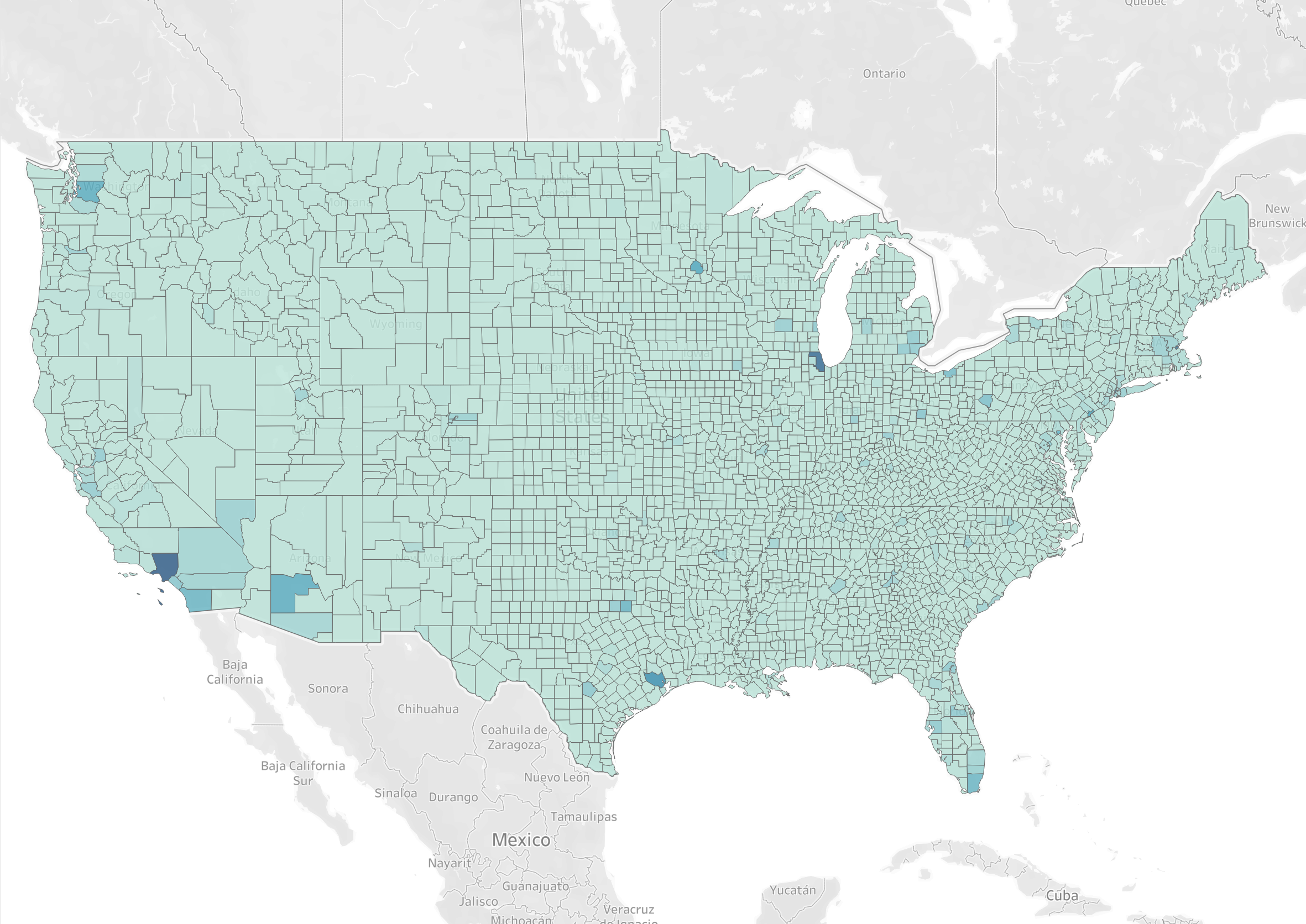
The CCI Specialty Atlas
Explore the geography of clinical specialties across the United States—and what workforce counts can and cannot tell us about actual clinical capacity.
Our working Atlas spans 60 clinical classification layers and 3,144 U.S. counties. Beginning in 2027, CCI plans a 30-week series introducing two specialty layers each week.
The question before the staffing decision
What work needs to be done? What capability does it require? How much? With what response time, continuity, redundancy, physical presence and other constraints? How do we know?
See the work
Formal utilization can reveal important demand. Other meaningful work may be absorbed, shifted, deferred, coordinated informally or otherwise remain less visible.
Define the requirement
CCI is interested in translating work into the amount and characteristics of capability required—not assuming that the answer begins as an FTE count.
Then consider architecture
Employment, independent practice, locums, telemedicine, fractional capacity, regional networks and hybrid models are candidate arrangements, not predetermined answers.
Learning before inventing
CCI examines existing methods, literature and prior art; learns from practitioners, founders and operators; develops working instruments where useful; and looks deliberately for evidence that should change the model.
Follow the workshop, not just the archive.
CCI’s website is the institutional memory. Field Notes is the working conversation: questions, collisions, revisions, abandoned hypotheses, discoveries and what remains unresolved.
Loading recent Field Notes…
Retrieving the latest essays from CCI’s Substack.
Where this inquiry came from
CCI began more narrowly with rural specialty access, specialist presence, fragmented demand, Tele-ID and fractional specialty capacity. Following those questions upstream produced the broader requirement question.
Rural settings remain important. Infectious diseases remains an important application. Fractional capacity remains a possible delivery architecture. None is assumed to define the underlying phenomenon or predetermine the answer.
Four ways into the work
Explore the Inquiry →
What CCI is trying to understand now.
See the Working Architecture →
A provisional decomposition of the capacity decision.
Trace Sources & Lineage →
What existed before CCI, what we are adapting, and where prior art remains unresolved.
Read Field Notes →
The working intellectual conversation behind the institutional record.